How to spot high-quality craftsmanship in Chinese chairs? The answer begins with patient observation, not a quick glance at decoration. A well-made chair should feel balanced before you sit down. Its legs should meet the floor evenly. Its joints should appear clean, tight, and deliberately fitted. Look closely at the corners. Small gaps may reveal rushed work, shrinking wood, or weak assembly.
Grace Wu Bruce, a respected Chinese furniture specialist and author, has emphasized that “the structure is the soul of the piece.” That principle remains useful today. Examine the chair’s mortise-and-tenon joints, especially beneath the seat and around the arms. Traditional joinery can show slight variation because it is handmade. Perfect symmetry is not always proof of quality. Sometimes, it hides machine production.
The wood should also reward close inspection. Dense hardwood often shows consistent grain, a natural sheen, and carefully softened edges. Run your hand along the armrest. It should feel smooth, but not unnaturally polished. Check whether the finish conceals cracks, filler, or uneven coloring. Ask about the wood species, drying process, repairs, and construction date. Reliable sellers should answer clearly and provide supporting details.
Still, judging a chair is not foolproof. I have seen attractive pieces with disappointing joints. I have also encountered modest chairs with exceptional strength. Photographs can mislead. Comfort matters, too. A chair may be historically impressive yet feel awkward after ten minutes. Quality craftsmanship combines durability, proportion, material honesty, and thoughtful use. The best choice leaves room for careful doubt.
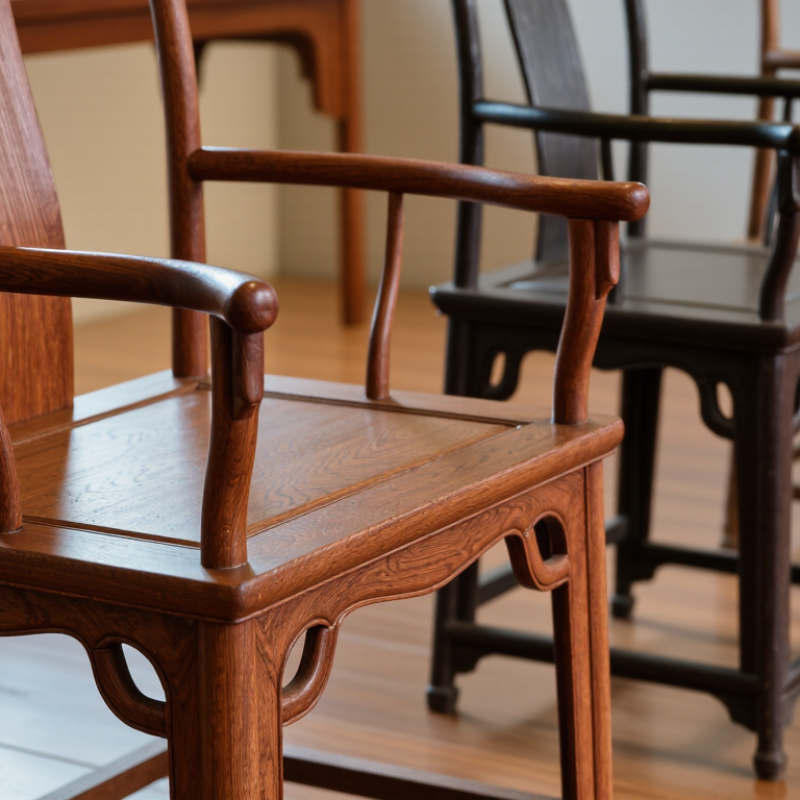
A well-made Chinese chair begins with honest wood selection. Ask which species was used, not merely whether it is “solid wood.” Elm, walnut, and beech each show different colors, pores, hardness, and movement. Color alone can mislead.
Study the end grain and long grain under natural light. Tight, continuous grain usually suggests careful board selection, while abrupt patterns may reveal joined pieces or veneer. Look for matching grain across visible components. It should feel intentional. Small knots are not automatically defects. They can be stable when properly sealed and positioned away from stress points.
I once mistook a dark finish for walnut. The exposed underside showed lighter elm. That mistake changed how I inspect furniture. A reliable check includes tapping the wood gently, examining hidden surfaces, and checking for excessive filler. The material should feel dense, not hollow or unusually light. A moisture meter can also reveal risk, especially in humid rooms.
Pay attention to the relationship between wood and construction. Seasonal movement is normal, so minor changes may appear over time. Large splits, lifting veneer, or wide gaps deserve concern. Traditional mortise-and-tenon joints can remain strong, but poor fitting may still cause rocking. I prefer evidence over polished descriptions. Even experienced buyers can overlook repaired wood when lighting is warm.
When examining a Chinese chair, begin beneath the surface. Traditional joinery often reveals more than polished wood. Look for mortise-and-tenon joints, where a fitted tenon enters a carefully cut mortise. The connection should feel tight, not forced. Gaps deserve attention. Tiny seasonal openings can be normal, but wide, uneven gaps may signal poor fitting or drying stress. Run your fingertips along the joint. You may feel a slight ridge. That is useful evidence.
Inspect how the legs meet the seat frame. In well-built chairs, the load travels through connected members rather than relying mainly on glue or screws. Corner joints should align cleanly, with no rocking under gentle pressure. Sit carefully and shift your weight. Listen for creaks. One quiet test matters. A chair that flexes evenly may be healthier than one that feels rigid but hides internal strain. I have found that visual symmetry can mislead; beautiful grain cannot repair weak structure.
Check stretchers, back posts, and the underside for repairs or inserted blocks. These details may show honest maintenance, or conceal a failed joint. Ask how the chair was made and restored, then compare the answer with what you can touch. Wood moves with humidity, so consider the room’s climate. No single sign proves quality. Even experienced buyers can misread old repairs, especially beneath dark finishes. A second inspection in natural light is wiser.
Examine Traditional Joinery and Structural Construction
| No. | Inspection Method | What to Examine | Quality Indicators | Simple Verification | Common Warning Signs |
|---|---|---|---|---|---|
| 1 | Check Traditional Joinery | Inspect mortise-and-tenon joints, including leg-to-apron, stretcher, and back-frame connections. | Joints appear tightly fitted, evenly aligned, and free from excessive filler. Traditional construction normally relies on accurately cut interlocking parts rather than visible dependence on screws or adhesive alone. | Use a strong flashlight to examine joint edges. Gently move the chair side to side and listen for clicking or knocking. | Open gaps, fresh glue lines, loose tenons, visible wood plugs, or joints that shift under light hand pressure. |
| 2 | Evaluate Structural Alignment | Check whether the legs, seat rails, back posts, and stretchers form a balanced, symmetrical frame. | The chair sits level on a flat surface, with no rocking, twisting, or visibly splayed components that do not match the design. | Place the chair on a hard, level floor and press each corner in turn. Measure matching leg or rail positions with a tape measure if necessary. | Uneven legs, diagonal twisting, inconsistent spacing, or rocking caused by poor assembly rather than an intentionally shaped base. |
| 3 | Inspect Wood Selection and Grain | Examine the wood’s grain direction, density, knots, end grain, and locations where stress is concentrated. | Structural members generally use straight, sound grain. Small decorative knots may be acceptable, but major cracks and severe cross-grain defects should not occur at joints or load-bearing points. | Inspect legs, stretchers, and rails from several angles. Run a fingernail lightly across suspicious cracks to distinguish surface texture from an open split. | Large dead knots, wormholes, filled cracks, short grain across a tenon, or splits extending from an end grain toward a joint. |
| 4 | Test Frame Rigidity | Assess resistance to lateral movement and front-to-back flexing without placing excessive force on the chair. | A well-assembled frame feels firm, with only limited elastic movement and no sudden looseness, squeaking, or joint separation. | With the chair on the floor, apply moderate hand pressure to the upper back and side rails. Do not stand on the chair or use body weight during inspection. | Rattling stretchers, pronounced side-to-side movement, creaking at several joints, or visible separation between rails and legs. |
| 5 | Review Seat and Back Construction | Check seat support, seat-to-frame connection, back-post stability, and the way the back panel or spindles are fitted. | The seat is supported evenly, the back does not wobble independently, and panels or spindles fit securely without harsh pressure points. | Press the seat gradually at the center and near each corner. Gently pull the backrest forward and backward while observing the joints. | Seat flex concentrated in one area, loose spindles, a backrest that moves separately from the frame, or unsupported wide boards with deep cracks. |
| 6 | Assess Seasonal Movement Protection | Look for construction details that allow solid wood to expand and contract across the grain, especially in panels and framed seats. | Floating panels, elongated fastener holes, and appropriately designed frame connections reduce the risk of splitting caused by changes in humidity. | Inspect the underside and rear of the chair for concealed fasteners, blocked panel edges, or cracks radiating from tightly fixed boards. | Wide solid panels rigidly glued on all sides, long splits beside fasteners, raised edges, or joints that have visibly opened after drying. |
| 7 | Examine Surface and Finishing Quality | Review sanding, edge treatment, coating consistency, carved details, and the transition between visible and hidden surfaces. | Edges are smooth but not excessively rounded, finish color is consistent, carved areas are clean, and no sharp splinters or unfinished structural surfaces are present. | View the chair under angled light and run a clean cloth over accessible edges. Check the underside for drips, rough sanding, and incomplete coating. | Blistering finish, heavy sanding scratches, rough edges, concealed filler, uneven stain absorption, or coating that hides cracks and poor joinery. |
Note: Inspection results should be considered together with the chair’s design, wood species, age, intended use, and normal seasonal movement. Avoid applying excessive force during testing.
7 Best Ways to Spot Quality Craftsmanship in Chinese Chairs
A well-made Chinese chair begins with proportion, not decoration. Sit with both feet flat. Your knees should form a relaxed angle, while the backrest supports your spine without forcing it forward. Measure the seat height, depth, and rail thickness. Small imbalances often reveal rushed production.
Inspect the carving under angled light. Crisp floral edges, consistent depth, and clean transitions suggest a skilled hand. Soft corners may indicate sanding, but they can also reflect age and honest use. Check joints closely. Traditional mortise-and-tenon connections should sit tightly, without wide gaps or excessive glue. According to CSIL’s World Furniture Outlook 2024, China remains the world’s largest furniture producer, with roughly 40% of global output by value. That scale offers expertise, but it does not guarantee individual quality. I have seen attractive chairs with weak rear joints.
Tips: Run a cotton cloth across carved areas. Loose fibers may catch on splinters. Look beneath the seat, too. Handcrafted details often appear where casual inspection stops. Slight tool marks can support authenticity, yet uneven measurements require reflection. Handmade does not automatically mean well made. Ask how the wood was seasoned, how long assembly took, and whether the maker corrected structural movement. The American Hardwood Export Council’s technical guidance notes that wood moisture changes can cause movement, so stable construction matters more than a flawless surface.
A practical 100-point inspection rubric for evaluating carving, proportion, joinery, and handcrafted details.
Joinery and structural integrity receive the highest weighting because they directly affect durability. Carving quality, proportion, and surface finishing help distinguish careful handwork from rushed production, while material consistency and hardware details provide additional evidence of overall workmanship.
A well-made Chinese chair should feel balanced before it looks impressive. Run your fingers lightly across the surface. Quality finishing feels smooth, but not unnaturally plastic. Look for even color, restrained gloss, and visible wood grain. Sharp edges often reveal rushed sanding. Inspect corners, rails, and the underside, where poor finishing is easier to hide. A faint scent of fresh lacquer may suggest recent work, not age.
Aging should appear gradual. Check areas touched often, such as armrests, front edges, and the seat frame. Genuine wear usually shows softened corners, small scratches, and uneven color changes. These marks should connect logically with the chair’s use. Be cautious when every surface looks equally dark or distressed. Artificial aging can imitate dirt, dents, and old polish. It can be convincing.
Authenticity requires more than an attractive patina. Examine joinery closely. Traditional mortise-and-tenon connections should look purposeful, with tight fitting and limited filler. Tool marks may support age, but they are not proof alone. Wood movement, repairs, and replacement parts can confuse even experienced buyers. I have learned not to trust one detail. Compare the finish, construction, proportions, and wear pattern together. A professional conservator or independent appraiser can document these observations, although even expert opinions deserve careful questions and written evidence.
When judging a Chinese chair, I use seven practical checks: comfort, posture, stability, joints, function, finish, and durability. Sit for five minutes, not five seconds. Your hips should feel supported, while your feet rest flat. Press the seat near its edges. Excessive sinking often signals weak foam or poor support. Then rock the chair gently. It should remain quiet and balanced.
Check underneath. Look for tight mortise-and-tenon joints, even welds, clean screws, and no fresh glue marks. A slight creak is not always failure, but I never ignore repeated movement. Test hinges, reclining parts, drawers, or folding mechanisms at least ten times. They should move smoothly without scraping. Inspect the finish under bright light. Uneven coating, sharp edges, and exposed wood deserve questions. ANSI/BIFMA X5.1 uses stability, load, and repeated-cycle tests as useful seating benchmarks, although a showroom inspection cannot replace laboratory testing.
Long-term durability also depends on materials and repair access. Ask about wood moisture control, hardware replacement, and cleaning instructions. UNEP’s Global Resources Outlook 2024 projects global material extraction could rise by 60% by 2060. That makes repairable construction more responsible than disposable design. I once trusted beautiful joinery too quickly; the chair later loosened at the back. Test the frame again. Lift one front leg slightly, apply normal body weight, and listen closely. A quality chair should feel calm, not merely attractive.
Look for fitted mortise-and-tenon joints. The connection should feel tight, not forced. Run your fingers across each joint. A small ridge can reveal the construction. Wide, uneven gaps deserve caution.
No. Wood expands and contracts with humidity. Tiny seasonal openings can be normal. Wide gaps, loose joints, or visible movement suggest deeper problems. Check the chair again in natural light.
Sit carefully and shift your weight. The chair should remain balanced and quiet. Lift one front leg slightly, then apply normal pressure. Repeated creaks or rocking require attention.
Check the underside, stretchers, back posts, and corner joints. Look for inserted blocks, fresh glue, or unusual screws. These may show honest repairs. They may also hide a failed connection.
Inspect carved areas under angled light. Crisp edges and consistent depth suggest careful work. Soft corners may come from sanding, age, or use. Run a cotton cloth across the surface. Loose fibers may catch on splinters.
Not automatically. Handmade work can still be careless. Compare tool marks with the chair’s measurements. Slight irregularities may feel authentic, but uneven structure needs reflection. I have misjudged attractive craftsmanship before.
Sit for five minutes, not five seconds. Keep both feet flat on the floor. Your knees should feel relaxed. The backrest should support you without pushing forward. Press near the seat edges. Excessive sinking may indicate weak support.
Ask how the wood was seasoned and controlled for moisture. Test moving parts repeatedly, if present. They should move smoothly without scraping. Check whether hardware can be replaced. Repairable construction often lasts longer than disposable design. I would inspect the frame twice.
How to spot high-quality craftsmanship in Chinese chairs? Begin by studying the wood species, grain direction, density, and overall material quality. Well-selected wood should feel substantial, age gracefully, and show a balanced grain rather than excessive defects or weak areas. Next, examine the structural construction, especially traditional joinery. Carefully fitted joints, even spacing, and a solid frame often reveal greater skill than visible fasteners or heavy adhesives. The chair should also have harmonious proportions, precise carving, and handcrafted details that remain consistent without appearing mechanically perfect.
Surface finish can provide further clues. Look for an even, thoughtfully applied finish, natural signs of aging, and details that support the chair’s history without looking artificially distressed. Finally, sit in the chair and test its comfort, balance, movement, and stability. A quality piece should support the body properly, resist wobbling, and remain functional under regular use. Combining visual inspection with hands-on testing helps distinguish genuine craftsmanship from a chair that merely imitates an appealing traditional style.

ELDI Home