What Is the Most Durable Wood for Chinese Furniture?

Time:2026-10-17 Author:Henry
0%

Choosing wood for Chinese furniture requires more than admiring a deep color or glossy surface. What are the most durable woods for Chinese furniture? Traditionally, huanghuali, zitan, and jichi have earned respect for their density, stability, and resistance to wear. Their tight grain can survive generations of handling, from cabinet doors sliding daily to chair arms polished by countless hands. Teak and elm also deserve attention, especially when availability, budget, and climate matter. Durability is not identical to rarity.

Experienced restorers examine more than the species name. They check kiln drying, moisture content, grain direction, old repairs, and the quality of mortise-and-tenon joints. A dense wood can still split when rushed through production. A beautiful table may warp beside a radiator or in a damp room. Small details matter, such as seasonal movement around drawer fronts and the fit of floating panels. There is no perfect answer, and traditional preferences can sometimes overlook practical modern conditions. I would not choose zitan simply because it sounds prestigious. I would ask how the furniture was built, finished, transported, and maintained. Reliable guidance should combine historical knowledge with advice from qualified conservators and responsible timber professionals. Certification and legal sourcing also matter, particularly for rare or protected species. The strongest choice balances authentic craftsmanship, structural stability, honest provenance, and realistic care. That balance is easy to describe, but harder to achieve.
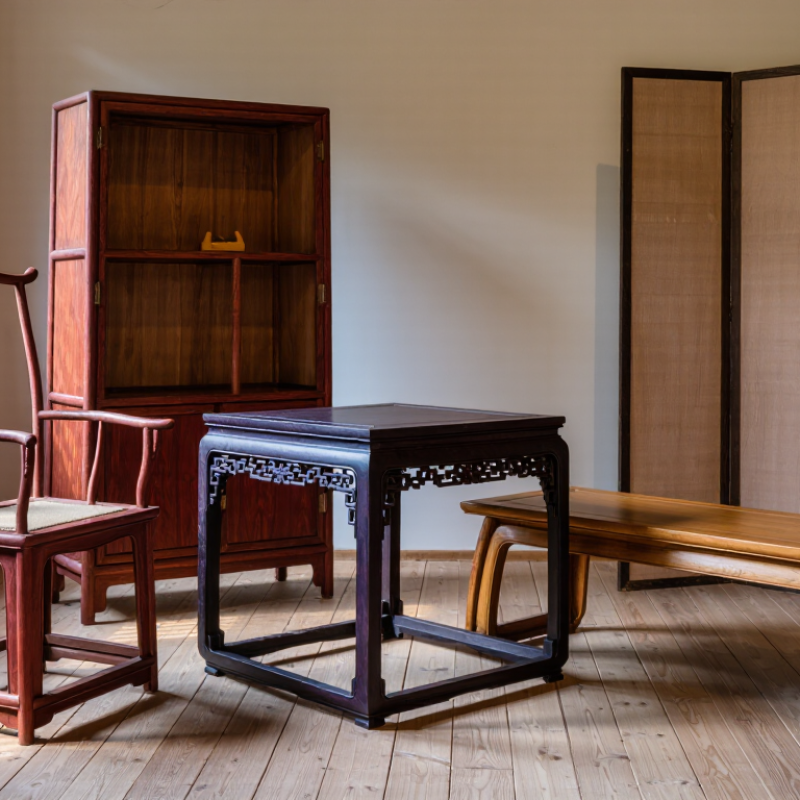
What Is the Most Durable Wood for Chinese Furniture?

Defining Durability in Traditional Chinese Furniture Wood

What Is the Most Durable Wood for Chinese Furniture?

Defining Durability in Traditional Chinese Furniture Wood

What makes a wood durable in traditional Chinese furniture? The answer is not hardness alone. Durability means surviving pressure, humidity, insects, movement, and repeated repair. A dense hardwood can resist dents, yet split when moisture changes too quickly. Stable grain matters just as much as weight.

In furniture assessment, I examine joints before judging the wood. A well-fitted mortise-and-tenon joint can protect a moderately hard timber for centuries. I once inspected an old yoke-back chair with worn elm surfaces. Its frame remained firm because the grain was stable and the joints allowed slight movement. The surface looked tired, not the structure.

Huanghuali and zitan are highly valued for density, wear resistance, and attractive grain. Nanmu can perform well when protected from persistent dampness. Elm is often less dense, but skilled construction and careful indoor conditions can extend its life remarkably. Wood selection also depends on climate, finish, craftsmanship, and maintenance. Calling one species the “most durable” oversimplifies the evidence. I used to judge durability by hardness alone. That view now seems incomplete. A chair that survives daily use, seasonal moisture, and thoughtful repairs offers a more practical definition of strength.

What Is the Most Durable Wood for Chinese Furniture?

Comparing representative Janka hardness values, a practical indicator of resistance to dents and wear

Among the woods commonly associated with traditional Chinese furniture, red sandalwood (Pterocarpus santalinus) has the highest representative hardness in this comparison, followed by huanghuali (Dalbergia odorifera). Harder woods generally resist surface dents and abrasion better, but long-term durability also depends on natural decay resistance, moisture control, joinery, seasoning, and maintenance. The values shown are representative Janka hardness figures in pounds-force and may vary by growth conditions and test sample.

Reference basis: published species data compiled in standard wood-property references, including the USDA Forest Products Laboratory Wood Handbook and established wood-species databases.

Comparing the Hardest Woods Used in Chinese Furniture

What Is the Most Durable Wood for Chinese Furniture?

Comparing the Hardest Woods Used in Chinese Furniture

Durability begins with hardness, but hardness is not the whole story. The USDA Forest Products Laboratory’s Wood Handbook, published in 2021, uses the Janka test to compare resistance to denting. Ebony ranks near 3,220 lbf, while Brazilian rosewood reaches roughly 2,790 lbf. Hard maple measures about 1,450 lbf, and teak averages approximately 1,070 lbf.

In traditional Chinese furniture, zitan is often considered one of the strongest choices. Its dense structure produces a smooth surface and sharp carved details. Huanghuali is usually less hard, yet it offers excellent stability and attractive grain. That balance explains its historical value. A chair made from dense rosewood can resist scratches from daily use, but excessive weight may increase joint stress.

Hardness is not everything.

The USDA report also links wood performance with density, moisture, and movement. A dense board can still crack when indoor humidity changes quickly. Workshop practice supports this warning: poorly seasoned wood may split around mortise-and-tenon joints, even when its Janka rating is impressive. This is where my view becomes less certain. Ranking species alone feels convenient, but it ignores construction quality, grain direction, and maintenance. For reliable Chinese furniture, select well-seasoned timber, inspect tight joinery, and verify responsible sourcing through current forestry documentation.

How Wood Grain and Density Affect Furniture Longevity

What Is the Most Durable Wood for Chinese Furniture?

Wood grain and density strongly influence how Chinese furniture ages. The USDA Forest Products Laboratory reports that density correlates with hardness, stiffness, and wear resistance. Its Wood Handbook, FPL-GTR-190, also notes that wood properties vary within the same species. A dense board usually resists dents better. However, density alone does not guarantee long service.

Straight, continuous grain helps distribute stress through rails, legs, and chair frames. Interlocked grain can improve visual character, but it may tear during shaping. It can also complicate repairs. In workshop inspections, loose joints often appear before the wood itself fails. This is why seasoned hardwood, accurate joinery, and stable moisture matter together.

Moisture is critical. The USDA report explains that wood expands and contracts as humidity changes. Furniture kept near a heater may develop checks, warped panels, or open joints. A practical indoor target is about 6–8% moisture content, depending on the climate. Janka hardness data published through standardized ASTM D143 testing also show large differences among hardwoods, with many dense hardwoods exceeding 1,000 lbf. Still, harder is not always better. Extremely hard wood may resist scratches but place greater stress on joints and tools. Traditional Chinese furniture deserves careful selection, not simple ranking.

What Is the Most Durable Wood for Chinese Furniture? — How Wood Grain and Density Affect Furniture Longevity
Wood Species Typical Air-Dry Density
(kg/m³)
Janka Hardness
(lbf)
Grain Characteristics Dimensional Stability Natural Decay Resistance Best Chinese Furniture Applications Overall Durability
Huanghuali
(Dalbergia odorifera)
Approximately 800–950 Approximately 2,700 Interlocked to straight grain with attractive ribbon, wave, and cloud-like figure; fine, even texture. Very high; dense heartwood generally resists movement when properly seasoned. High; naturally durable heartwood, although availability and legal sourcing require careful verification. High-end chairs, cabinets, tables, altar tables, and detailed traditional reproductions. Exceptional
Zitan
(Pterocarpus santalinus)
Approximately 900–1,200 Approximately 2,900–3,800 Usually straight to slightly interlocked grain; very fine texture and a dense, smooth surface. High after thorough seasoning, but its density makes slow drying essential. High; dense heartwood provides strong resistance to wear and many forms of decay. Carved furniture, ceremonial pieces, cabinets, screens, and heavily used structural components. Exceptional
Teak
(Tectona grandis)
Approximately 650–750 Approximately 1,000–1,150 Usually straight grain with a coarse texture; natural oils can give the surface a warm sheen. Very high; performs well under changes in humidity and temperature. Very high; naturally resistant to moisture, insects, and decay. Dining tables, benches, garden furniture, humid-climate furniture, and durable cabinet components. Very high
Black Walnut
(Juglans nigra)
Approximately 600–660 Approximately 1,010 Mostly straight grain with occasional waves or curls; medium texture and good machining properties. High; typically shrinks and swells less than many lighter hardwoods. Moderate to high; heartwood has useful resistance, while sapwood is less durable. Modern Chinese-style tables, cabinets, armchairs, screens, and interior joinery. Very high
White Oak
(Quercus alba)
Approximately 680–770 Approximately 1,350 Prominent open grain with strong ray fleck; distinctive texture suits both traditional and contemporary designs. Moderate to high; quarter-sawn boards offer improved stability. High; tyloses help limit moisture penetration in the heartwood. Dining furniture, benches, bed frames, cabinets, and load-bearing furniture parts. Very high
Beech
(Fagus spp.)
Approximately 680–720 Approximately 1,300 Fine, generally straight grain with a uniform texture; bends well when steam-treated. Moderate; requires careful kiln drying and stable indoor conditions. Low to moderate; needs protective finishing in damp environments. Chair frames, stools, turned legs, indoor tables, and painted Chinese-style furniture. High indoors
Elm
(Ulmus spp.)
Approximately 530–650 Approximately 800–1,000 Interlocked and often irregular grain with a coarse texture; attractive movement and strong visual character. Moderate; interlocked grain can reduce splitting but may increase drying difficulty. Moderate; heartwood is more durable than sapwood but still benefits from a protective finish. Traditional Chinese tables, benches, cabinets, stools, and rustic-style furniture. High with maintenance
Ash
(Fraxinus spp.)
Approximately 650–700 Approximately 1,320 Mostly straight, open grain with pronounced growth rings; resilient and visually similar to some oaks. Moderate; stable when properly dried and protected from moisture. Low to moderate; not ideal for persistently damp conditions without treatment. Chair frames, tables, cabinets, curved components, and contemporary Chinese furniture. High indoors
Pine
(Pinus spp.)
Approximately 350–550 Approximately 380–870 Straight grain with visible knots and a relatively soft, resinous texture. Moderate; can move noticeably with humidity changes if not properly seasoned. Low to moderate depending on species and treatment; sapwood is generally vulnerable. Budget furniture, painted cabinets, shelving, prototypes, and lightly used indoor pieces. Moderate

Data note: Density and Janka hardness values are typical reference ranges for air-dried wood and can vary by species, growing conditions, moisture content, and test method. Furniture longevity also depends on joinery, seasoning, finish quality, indoor humidity, and protection from direct sunlight and water. For Chinese furniture, stable grain orientation and properly dried wood are often as important as density alone.

Evaluating Resistance to Moisture, Insects, and Wear

Dense rosewood is often considered among the most durable woods for Chinese furniture. Its tight grain resists dents, scratches, and daily abrasion. Properly seasoned elm and walnut can also perform well, especially in stable indoor rooms. Wood selection alone is not enough. Poorly dried timber may crack, twist, or loosen at the joints.

Moisture remains a serious concern. Even dense hardwood absorbs humidity through exposed end grain and unfinished areas. In damp rooms, swelling can affect drawers and traditional mortise-and-tenon connections. Rosewood usually handles moisture changes better than softer woods, but it is not waterproof. Insects are another consideration. Clean, kiln-dried heartwood offers stronger protection than sapwood, although no untreated furniture is completely insect-proof. I have seen beautiful old pieces develop hidden damage near the floor, where ventilation was poor.

Tips

Keep furniture away from wet walls, heaters, and direct sunlight.

Wipe spills quickly with a soft, dry cloth.

Use felt pads beneath heavy objects and lift furniture instead of dragging it.

Inspect joints, undersides, and drawer interiors twice yearly.

A stable indoor humidity level helps reduce cracking and movement.

Avoid aggressive polish; it can hide early damage and complicate later repairs.

My own preference is a durable hardwood with honest construction, rather than the hardest wood available. Very dense timber can still fail when rushed seasoning or careless joinery weakens it.

Choosing the Most Durable Wood for Different Furniture Uses

What Is the Most Durable Wood for Chinese Furniture?

Choosing the Most Durable Wood for Different Furniture Uses

Durability depends on the furniture’s job, not only its species. The USDA Forest Products Laboratory’s Wood Handbook reports Janka hardness values of about 830 lbf for Chinese elm, 1,010 lbf for black walnut, and 1,360 lbf for white oak. Hard maple reaches roughly 1,450 lbf. These figures measure dent resistance, not complete service life. That distinction matters.

For carved cabinets and traditional tables, Chinese elm offers workable grain and respectable strength. Its moderate hardness also helps craftsmen shape rounded edges and detailed joints. For dining surfaces, white oak resists everyday dents better. Hard maple suits heavily used stools, chair seats, and narrow table edges. Walnut works well for refined cabinets and drawer fronts, although its darker surface can reveal scratches clearly. In my experience, joinery often decides longevity. A hard board with weak mortise-and-tenon joints still fails early. Moisture control is equally important. The Wood Handbook explains that wood gains and loses moisture with surrounding humidity, causing seasonal movement. Furniture should be manufactured near its expected indoor moisture range, commonly around 6–8 percent. This is not a universal rule. Heated rooms, coastal homes, and unfinished surfaces behave differently. Leaving space for wood movement remains essential. That small detail is often overlooked.

FAQS

What makes wood durable in traditional Chinese furniture?

Durability means resisting pressure, humidity, insects, movement, and repeated repairs. Hardness alone is not enough. Stable grain matters.

Which wood is usually considered highly durable?

Dense rosewood, zitan, and huanghuali are highly valued for wear resistance and tight grain. They can still crack without proper seasoning.

Can softer wood last for centuries?

Yes. Properly seasoned elm can last remarkably long with accurate joints and stable indoor conditions. Construction often matters more than appearance.

How important are mortise-and-tenon joints?

Very important. A well-fitted joint allows slight movement without breaking the frame. I inspect the joints before judging the wood.

Does higher density always mean better furniture wood?

No. Dense wood resists dents, but it may stress joints, split during moisture changes, or challenge repairs. My earlier view was too simple.

How does indoor humidity affect wooden furniture?

Wood expands and contracts as humidity changes. Near a heater, panels may warp, joints may open, and small checks may appear.

How can owners reduce moisture and insect damage?

Keep furniture away from wet walls, heaters, and strong sunlight. Wipe spills quickly. Inspect undersides, joints, and drawers twice yearly.

Is dense hardwood waterproof and insect-proof?

No. Even dense hardwood absorbs moisture through end grain and unfinished areas. Clean heartwood offers better protection, but no untreated wood is completely safe.

What daily habits help furniture last longer?

Use felt pads under heavy objects and lift furniture instead of dragging it. Avoid aggressive polish. It may hide early damage.

How should buyers judge the most durable wood?

Consider climate, grain, density, seasoning, finish, joinery, and maintenance together. The hardest wood is not always the wisest choice.

Conclusion

Durability in traditional Chinese furniture depends on more than hardness alone. A truly durable wood combines high density, stable grain, resistance to warping, and the ability to withstand daily wear. Dense hardwoods generally provide stronger frames and better surface longevity, while tight, consistent grain can help reduce cracking and structural movement. However, even the hardest wood may fail if it is poorly seasoned, exposed to excessive moisture, or neglected over time.

What are the most durable woods for Chinese furniture? In general, dense hardwoods are strong candidates because they offer good resistance to insects, abrasion, and humidity-related damage. The best choice also depends on the furniture’s purpose: chairs and tables require excellent impact resistance, cabinets benefit from dimensional stability, and decorative pieces may prioritize fine grain and lasting appearance. Careful craftsmanship, proper drying, protective finishing, and a controlled indoor environment are equally important in preserving furniture for generations.

Henry

Henry

Henry is a dedicated marketing professional with a profound expertise in the company's offerings. With years of experience in the industry, he possesses an impressive understanding of the market dynamics and consumer behaviors that drive success. Henry is committed to sharing his insights through......