A Chinese screen can transform a small apartment without consuming valuable floor space. Its carved wood, muted lacquer, or woven panels add character while defining separate living zones. The real challenge is balance. A screen should create privacy, not make the room feel crowded or poorly lit. This guide explores 7 Best Ways to Style a Chinese Screen in a Small Apartment, using practical ideas suited to compact homes. How to style a Chinese screen in a small apartment? Begin by studying movement, daylight, and sightlines. Measure the available corner before choosing a screen. A folding design usually offers greater flexibility than a fixed panel.
In my experience, screens work best when they serve more than decoration. They can separate a sleeping area, soften a work corner, or hide open storage. Keep at least a comfortable walking path around the panels. Natural light matters. Place the screen beside a window rather than directly across it. Designers often recommend pairing ornate screens with quiet furniture, allowing one feature to lead the room. However, rules can fail. I once placed a dark screen beside heavy shelving, and the corner felt smaller than expected. A lighter rug solved part of the problem, though not perfectly. That imperfection is useful. It shows why color, scale, texture, and daily habits must be considered together. The following ideas focus on practical styling, visual proportion, and flexible use. Small changes can make a screen feel intentional rather than accidental.
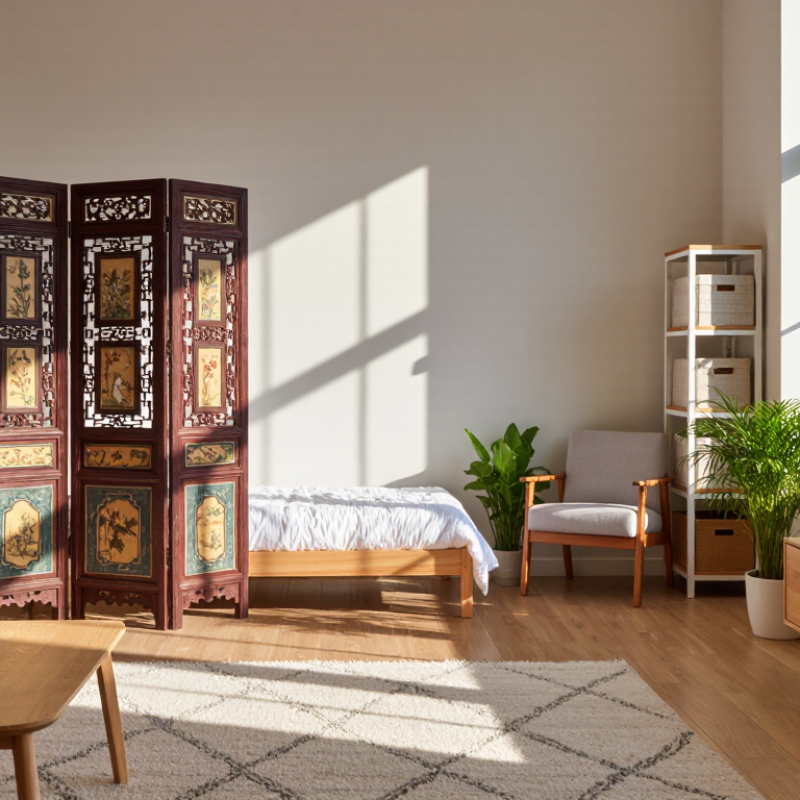
Choosing the right Chinese screen for a small apartment begins with accurate measurements. Measure the wall, walking path, and nearby furniture before shopping. A screen should define space without blocking movement. In my experience, three narrow panels often work better than one wide panel. They fold neatly beside a sofa or doorway. Leave at least 70 centimetres for comfortable passage. That small detail matters.
Material affects both appearance and daily comfort. Open lattice panels allow daylight to pass through, keeping a studio brighter. Solid wooden panels provide more privacy but may make a compact room feel enclosed. Look for stable hinges, balanced feet, and a finish that is easy to dust. Screens made from natural materials can vary slightly in colour. That is normal. I once selected a beautiful screen that was too heavy to move, which made cleaning frustrating.
Choose a screen slightly shorter than the ceiling to maintain visual space. Test its stability on your actual floor, especially near rugs or uneven boards. Place it beside a window first, then observe the afternoon shadows. Avoid sharp edges in narrow walkways. A folding screen should support your routine, not create another obstacle. If the pattern feels busy beside existing artwork, a simpler design may suit the apartment better. Small rooms reward restraint.
Before styling a Chinese screen, measure the room as carefully as the screen itself. Use a tape measure to record wall width, ceiling height, door swings, and walking paths. Include baseboards and window frames. They reduce usable space. A few centimeters matter in a small apartment.
Measure the screen fully opened and folded. Some folding panels need extra room to angle safely. Keep at least 75 to 90 centimeters for a comfortable passage. Avoid blocking radiators, vents, natural light, or electrical outlets. Mark the proposed position with painter’s tape or flattened cardboard. Live with that outline for one day. It reveals awkward corners better than a quick glance.
Place the screen where it separates functions without making the room feel divided. It can shield a desk, soften a sleeping area, or hide storage near an entryway. Check the view from the sofa, bed, and doorway. The decorative panels should face the main sightline, while the hinges need enough clearance to move. I once placed a screen too close to a cabinet. It looked balanced in photographs, but daily opening became irritating. A slightly uneven layout may work better than a perfect one. Secure the screen according to its construction, especially in homes with children or pets. Recheck the measurements after adding a rug or furniture, because those small additions can change the whole placement.
Use the room dimensions and circulation clearances below as a practical planning guide. The example fits a 4.5 m × 4.0 m living room while preserving a comfortable walkway around the decorative screen.
How to read the chart: A 1.8 m wide screen can define a zone without overwhelming a compact room. Keeping approximately 0.9 m for the main walkway and 0.6 m between the screen and nearby furniture helps maintain practical circulation.
A Chinese screen can divide a small apartment without turning it into a dark box. The EPA reports that people spend about 90% of their time indoors, so daylight deserves careful protection. Place a folding screen perpendicular to the window, not across it. This keeps sunlight moving toward the deeper part of the room. Choose an open lattice for a softer boundary. Use a pale, matte finish to reflect light gently. Glossy surfaces can create harsh glare.
Try seven practical arrangements: frame a work corner, shield a bed, separate dining space, hide storage, guide an entry path, divide a studio, or define a reading chair. A movable screen gives you control when needs change. A 2023 report from the American Society of Interior Designers emphasizes adaptable, wellness-focused interiors, though flexible design can still feel unfinished. Mine sometimes does. That is worth noticing before buying more furniture.
Tips: Keep at least 60–90 centimetres beside the screen for comfortable movement. Check the sun at morning and late afternoon, not only at noon. Avoid placing solid panels directly in front of windows. The U.S. Department of Energy recommends using daylight while controlling glare, and a semi-open screen supports both aims. Add a warm floor lamp behind the screen for evening depth. Secure tall panels carefully, especially in homes with children or pets.
A Chinese screen can divide a small apartment without making it feel closed. Place it beside a sofa, not directly across a doorway. This creates a soft visual boundary and preserves walking space. The 2023 IKEA Life at Home Report surveyed more than 37,000 people across 38 countries. Its findings emphasize that people want homes supporting comfort, identity, and connection. A screen can serve all three roles when its scale remains modest.
Match the screen with low-profile furniture, such as a narrow console, a woven bench, or a compact wood table. Keep at least 60 centimeters around moving furniture where possible. Pale oak, warm white, and muted jade can calm a busy room. Terracotta cushions add contrast without competing with carved panels.
I once paired a dark screen with heavy walnut furniture. The room looked smaller. That choice needed more restraint.
Use the screen as a backdrop for one strong object, perhaps a ceramic vessel or a simple ink-style print. Avoid filling every panel with decoration. The 2024 World Green Building Trends report highlights growing attention to adaptable, healthier interiors. A movable screen supports that principle because it can change with daily needs. Face one panel toward daylight, but check glare during afternoon hours. Natural fibers, soft lamps, and uncluttered surfaces make the partition feel intentional. I would not treat symmetry as a rule. Small apartments often need useful imbalance.
A Chinese screen can divide a room without permanently shrinking it. Choose a lightweight, folding design with three or four panels. Place it beside a sofa, not across a walkway. This creates a visual boundary while preserving circulation.
The 2022 UN-Habitat World Cities Report estimates that 1.6 billion people live in inadequate housing. Adaptability matters in compact homes, not only appearance.
Try seven practical moves: zone, fold, angle, layer, store, reflect, and edit. A screen can hide a desk, soften a bed corner, or frame a dining area.
Keep at least 75 centimetres of walking space where possible. That figure supports safer daily movement, although every apartment needs measuring first.
Tips
Test the screen for one week. Move it each evening. Notice where daylight changes. Place it near a window for gentle shadows, but avoid blocking ventilation.
Pair it with one low cabinet, rather than several small objects. The 2024 National Association of Home Builders survey continues to rank storage spaces among highly requested home features.
Use the screen as a visual storage filter, not a storage substitute. Baskets behind it can hold blankets and cables. Keep heavier items low.
The arrangement may look slightly uneven. That is acceptable. Perfect symmetry can make a small room feel rigid.
For balance, repeat one material from the screen in the room. A wood tone can appear in a stool or picture frame. Limit strong colors to one panel or nearby textile.
Leave some wall visible. Empty space gives the folding screen room to breathe.
Reconsider the layout after cooking, working, and cleaning. A beautiful arrangement that interrupts real habits needs changing.
Place it beside a sofa, not across a doorway. Keep the walking route open. A soft boundary works better than a hard barrier.
Choose a lightweight folding screen with three or four panels. It can divide a room without permanently shrinking it. Measure the space first.
Keep about 60 to 75 centimetres for movement where possible. Every apartment needs careful measuring. A narrow passage becomes frustrating quickly.
Pair it with a narrow console, woven bench, or compact wooden table. Low-profile furniture keeps the room visually calm. Avoid crowding the screen with several small pieces.
Pale oak, warm white, and muted jade create a quieter mood. Terracotta cushions can add controlled contrast. Limit strong colors to one panel or nearby textile.
Use one strong object, such as a ceramic vessel or simple ink-style print. Leave some panels and wall space visible. Empty space helps the screen breathe.
Use it as a visual filter, not a storage substitute. Baskets behind it can hold blankets and cables. Keep heavier items low. The room may look slightly uneven.
Test the arrangement for one week. Move it each evening and observe daylight, glare, cooking, and cleaning. Do not block ventilation near a window. A beautiful layout may still interrupt daily habits.
This guide explores How to style a Chinese screen in a small apartment? It begins with choosing a screen that suits the room’s size, layout, and purpose, whether you want to create privacy, define a dining area, or add an artistic focal point. Careful measurements and placement planning help prevent the screen from making the apartment feel crowded. Instead of blocking windows or reducing brightness, position it to separate spaces while preserving natural light and an open visual flow.
The article also explains how to coordinate a Chinese screen with existing furniture, wall colors, lighting, and decorative details. A balanced combination of textures and tones can make the screen feel integrated rather than overpowering. Finally, it emphasizes flexibility: use lightweight or movable designs when possible, keep pathways clear, and avoid excessive decoration. With thoughtful planning, a Chinese screen can provide structure, character, and privacy while helping a compact apartment remain comfortable and adaptable.

ELDI Home